
06/21/2023

How to Store Hydraulic Cylinders Safely: Hydraulic Equipment Storage 101

Discover the importance of proper storage procedures for hydraulic cylinders and tips on how to prepare cylinders for storage. Call us today for repairs!

Properly maintaining hydraulic cylinders is essential to ensure proper performance and longevity. But how is this done? The proper hydraulic store measures can help limit cylinder repairs and complications, and it’s not too challenging to master.

For all the hydraulic storage insight, here is the 101 on storage of these essential components.
The Important Steps to Take Before Storing Hydraulic Cylinders

hydraulic parts warehouse

Before storing away any cylinders in a hydraulic parts warehouse, there are a few essential steps to take to ensure they are properly prepped for safekeeping.

Prior to storing away your hydraulic cylinders, be sure to:
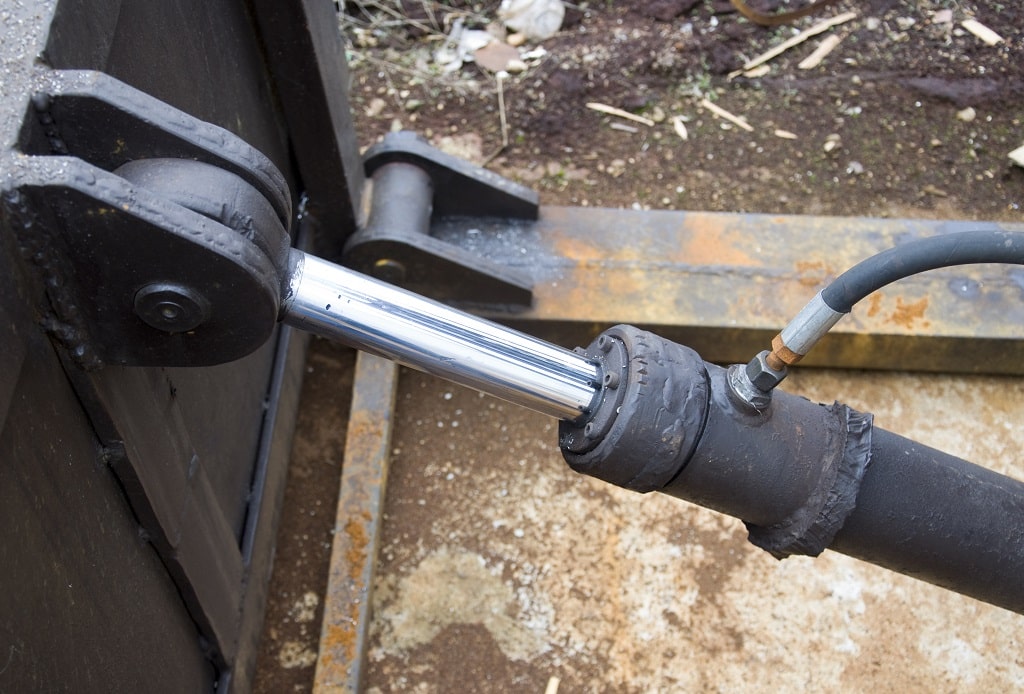
  • Grease: To protect hydraulic cylinders from rusting where metal parts are exposed, be sure to grease the system, smearing along the internal surface of the eye, clevis bushes, and bearings;
  • Use Oil-Impregnated Tape: In order to maintain the cylinder rod’s chrome-exposed areas, use oil-impregnated tape to create a protective layer. This hydraulic cylinder cover will help ensure no exposed areas become damaged over time. Prior to applying the tape, be sure that the rod is fully retracted to avoid damaging the rod seal;
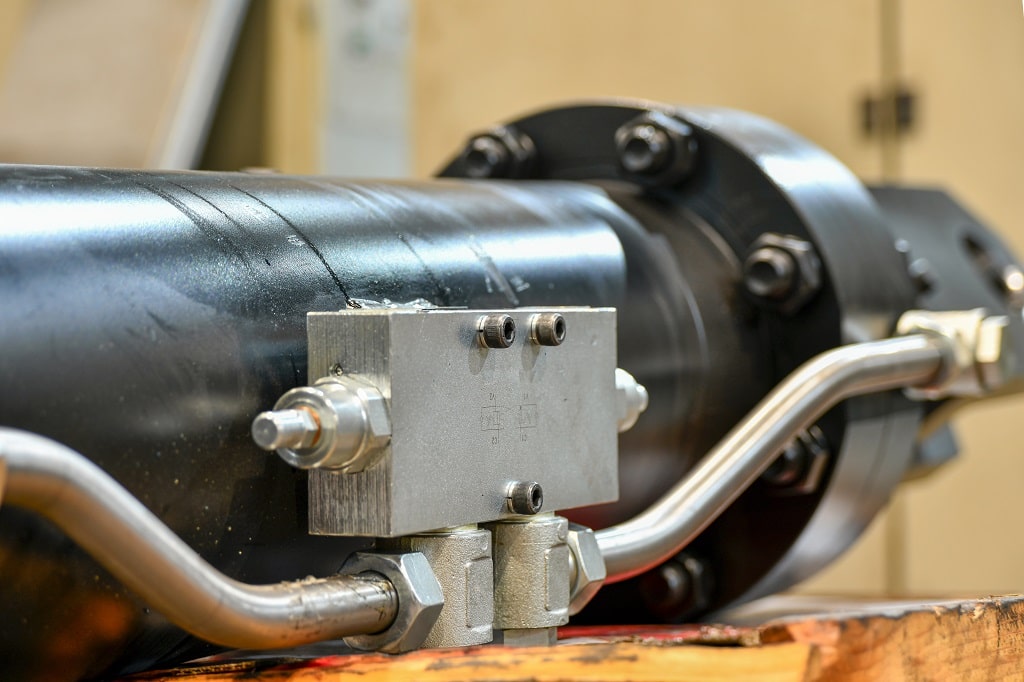
  • Plug Service Ports: Use steel plugs to plug the service ports that are rated for the working pressure. Unlike steel plugs, plastic plugs won’t effectively seal and can become dislodged more easily.

Necessary Conditions for Hydraulic Cylinder Storage

hydraulic cylinder rack

Before placing your cylinder on a hydraulic cylinder rack, there are some essential conditions you should ensure before storing away.

For your checklist when storing hydraulic cylinders, check that:

  • You always store cylinders in a fully retracted position;
  • They are stored indoors in a dry, clean space;
  • All internal surfaces of the eye and clevis bushes are smeared with grease, especially if they are steel;
  • Protect any exposed chrome along the rod using options like petroleum jelly-impregnated tape. Prior to using the tape, ensure the rod is fully retracted to avoid damage to the seal;
  • Plus the service port with steel, avoiding plastic, plugs, or blanking plates;
  • Fill the cylinder with clean hydraulic oil through the rod-end service port. In cases where it’s a high-pressure cylinder, has a large diameter, or is expensive, this is a key step for long-term maintenance.

How to Store Hydraulic Cylinders with Oil

For heavy, expensive, and high-pressure hydraulic cylinders, storing them with oil is a great step to take to preserve their design. To do this, ensure that the cylinder is fully retracted and use the rod end to fill it with oil. This process will help reduce the risk an intensified pressure can cause.

For safety reasons, it’s recommended that heavy hydraulic cylinders are placed horizontally in storage. That being said, if you plan to store for long periods of time, this storage style can have a sagging effect on the seals. To prevent damage to the seals, the cylinder will need to be rotated 90 degrees every two weeks.

How to Store Hydraulic Cylinders with Air

To store cylinders with air, it’s important to ensure that the air used to fill the cylinder is dry. If it is filled with moisture, it can cause rusting and pitting on the surface, reducing the efficiency of the cylinder and the lifespan of the system.

When opting to fill cylinders with air, it’s best to store them in a vertical position with the piston rod facing up and the cylinder retracted. This will help limit static side loads, as well as corrosion by preventing condensation. Keep in mind, this storage choice can have issues, as the cylinder may fall off the hydraulic cylinder storing rack, causing damage.

Conclusion

__wf_reserved_decorative

When investing in a cylinder, you surely want it to last through the years. With this in mind, whenever you decide to store your hydraulic cylinder away, taking the necessary steps and precautions to ensure its longevity while on the hydraulic cylinder rack is a must to prevent rusting or other damage that can occur over time.

For any cylinder maintenance or repair needs, our hydraulic cylinder repair company, Cylinders, Inc. is eager to help. For more information, contact us today!

Blog

Related posts

Explore articles on cylinder repair, maintenance best practices, and manufacturing insights.

Hydraulic Cylinder Repair Cost vs Replacement: What’s More Affordable?

In the construction industry, uptime isn’t just a box to tick or a KPI on  a report — it’s the lifeblood of every project and the backbone of  profitability. When hydraulic systems falter, the ripple effect goes far  beyond just a stopped machine. Downtime can quickly escalate into lost  hours, missed deadlines, and thousands of […]

Hydraulic Cylinder Repair Cost vs Replacement: What’s More Affordable?
Construction Project KPIs: How to Measure What Really Matters

In the construction industry, equipment uptime isn’t just a  performance metric — it’s a strategic imperative.  Maintenance managers, fleet directors, and operations leaders face  pressure to improve performance, lower operating costs, and keep  equipment online in demanding environments.   Core KPIs like Planned vs. Actual Cost, Schedule Performance Index  (SPI), Cost Performance Index (CPI), Labor Productivity, […]

Construction Project KPIs: How to Measure What Really Matters
The Future of Reactive, Preventive & Predictive Maintenance: Trends to Watch in 2026

Industrial performance in 2026 and beyond is being shaped by how effectively maintenance is managed. What was once a background function is now a key driver of uptime, profitability, and long-term asset performance. Across construction, manufacturing, and heavy equipment sectors, this shift is driving a move away from purely reactive maintenance toward a more structured […]

The Future of Reactive, Preventive & Predictive Maintenance: Trends to Watch in 2026

Thank You!

We will get you touch with you very soon.