
A hydraulic cylinder can fail for a simple reason, such as a worn rod seal, or for a combination of problems involving the rod, barrel, piston, gland, welds, and mounting points. That is why hydraulic cylinder repair cost cannot be reduced to one flat price. The most accurate estimate comes after the cylinder has been cleaned, disassembled, inspected, measured, and tested by a qualified repair shop.
For equipment owners and operations teams, the better question is not only, “What will the repair cost?” It is, “Which option restores reliable service at the lowest total cost of ownership?” A low initial quote has little value if the cylinder returns with the same root cause, fails again under load, or keeps a critical machine out of service longer than expected.
Quick answer: A basic reseal or limited repair may cost hundreds of dollars, while a large or heavily damaged cylinder that requires a new rod, barrel work, machining, welding, or custom components can reach several thousand dollars. Size, design, damage, parts availability, labor, testing, turnaround time, and transportation all affect the final estimate.
These terms are often used interchangeably, but they describe different levels of work. Understanding the difference makes repair quotes easier to compare.
A reseal focuses on replacing wear items such as piston seals, rod seals, wipers, O-rings, and backup rings. It may be appropriate when the metal components remain within specification and the failure is limited to seal wear or leakage. A reseal should still include cleaning, inspection, correct seal identification, reassembly, and functional testing.
A repair corrects one or more specific defects. Examples include polishing or rechroming a rod, repairing a damaged thread, replacing a bearing or gland, correcting a weld, honing the tube, or machining a replacement component. The cylinder may not require complete remanufacturing, but the repair should address the actual cause of failure rather than the visible symptom alone.
A rebuild is a more comprehensive process. The cylinder is completely disassembled and every serviceable component is inspected against dimensional and surface-finish requirements. Worn parts are repaired or replaced, the cylinder is resealed, and the finished assembly is pressure and function tested. Rebuilt hydraulic cylinders can often return to dependable service without the lead time or cost of a new custom unit.
Replacement may be the correct decision when the barrel is cracked, the design is no longer suitable for the application, major components are unavailable, or the combined repair cost approaches the cost of a readily available new cylinder. Replacement can also make sense when an obsolete cylinder creates repeated downtime and a redesigned unit would improve reliability.
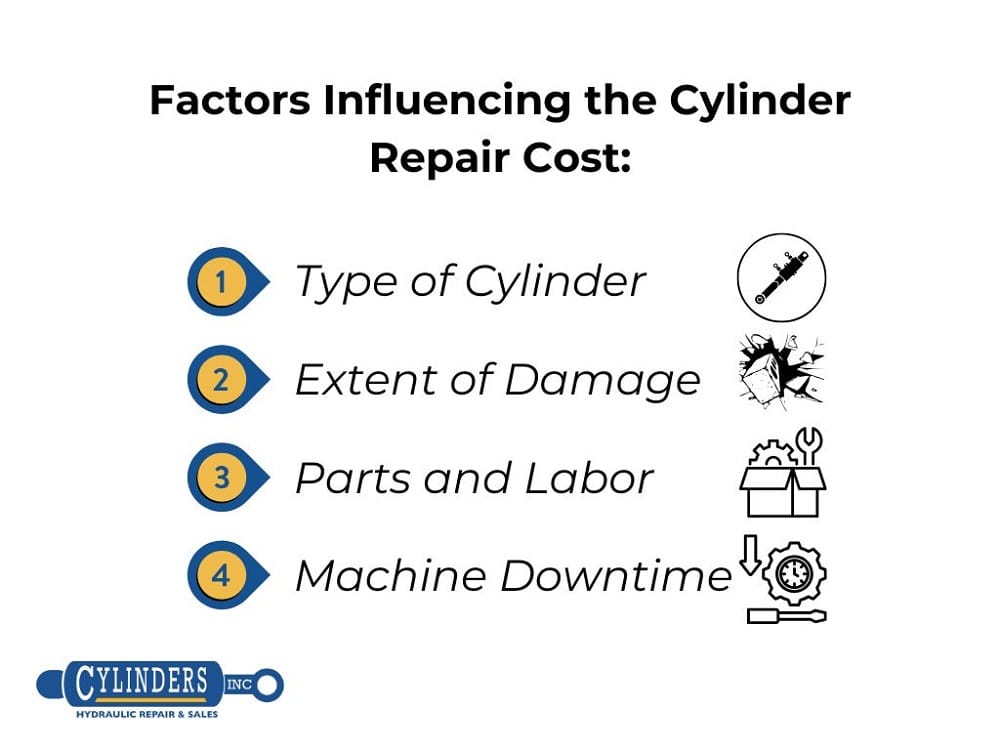
Larger cylinders require more labor, heavier handling equipment, larger seals, more material, and longer machining or honing time. Tie-rod, welded, telescopic, mill-duty, stainless, and position-sensing cylinders also have different disassembly methods, tolerances, and component requirements.
A visible oil leak may be caused by a worn seal, but it can also result from a scored rod, excessive side loading, a damaged gland, contaminated fluid, an out-of-round tube, or internal pressure problems. A seal-only quote will not remain accurate if inspection reveals damage beneath the surface.
The piston rod must be straight, dimensionally correct, and smooth enough to protect the rod seal. Light surface damage may be polished. Deeper pitting, corrosion, scoring, or worn chrome may require rechroming, laser cladding, or fabrication of a replacement rod. Bent rods may be straightened only when the material and condition allow it.
The cylinder tube must provide the correct bore geometry and surface finish for the piston seals. Scoring, corrosion, distortion, or excessive wear can require honing, machining, sleeving, or tube replacement. The correct option depends on remaining wall thickness, pressure rating, and the cylinder design.
Seal kits, wear bands, bearings, bushings, pins, glands, pistons, rods, tubes, ports, and mounting components all affect material cost. OEM or specialty parts may have longer lead times. Custom machining can be a better option when replacement components are obsolete or unavailable.
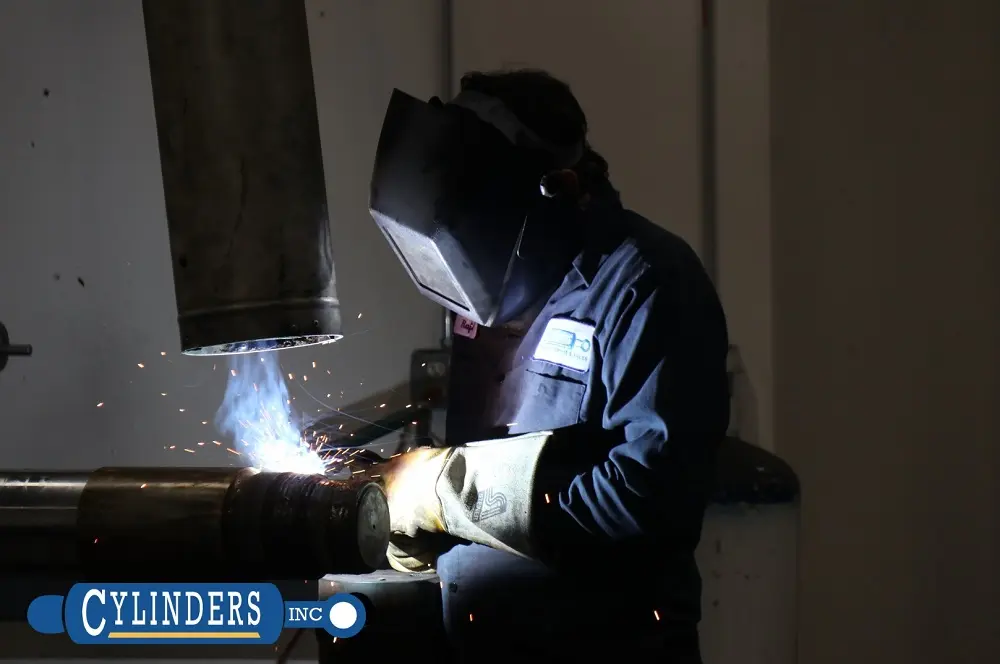
Repairing damaged mounts, ports, threads, retainers, or structural components requires skilled labor and controlled procedures. Custom fabrication is often a significant part of a rebuild estimate, but it can also extend the life of an otherwise serviceable cylinder and eliminate the delay of sourcing a special replacement.
A professional quote should account for more than parts. Proper cleaning, contamination control, dimensional inspection, seal installation, controlled assembly, pressure testing, leak testing, and function testing are essential to a reliable result. Skipping these steps may lower the invoice while increasing the risk of another failure.
Expedited work may carry a premium because the cylinder moves ahead in the production schedule and may require priority machining, parts sourcing, pickup, or delivery. For a critical machine, however, the cost of expedited repair may be small compared with lost production, idle labor, rental equipment, or missed project milestones.
| Repair scenario | What the shop may find | Expected cost direction |
|---|---|---|
| External leak with a clean, undamaged rod | Worn rod seal, wiper, or static seals | Lower, if the cylinder passes inspection |
| Cylinder drifts or loses holding force | Piston seal bypass, worn bore, valve issue, or pressure problem | Low to moderate after diagnosis |
| Scored or pitted rod | Seal damage plus rod polishing, rechroming, or replacement | Moderate to high |
| Damaged barrel or bore | Honing, machining, sleeving, or tube replacement | Moderate to high |
| Bent rod or misaligned mounts | Rod work, mount repair, and root-cause correction | Moderate to high |
| Large telescopic or custom cylinder | Multiple stages, specialty seals, machining, testing, and heavy handling | Higher and more variable |
A sound decision considers the full operating context, not just the invoice. The following factors usually carry the most weight: For a deeper comparison, see when it makes sense to repair or replace a hydraulic cylinder.
The more information a repair shop receives, the faster it can identify the likely scope and prepare an estimate. Provide the equipment make and model, cylinder manufacturer and part number, bore, rod diameter, stroke, mounting style, operating pressure, fluid type, failure symptoms, photos, and the machine’s required return-to-service date.
Ask whether the estimate includes teardown, inspection, parts, metal work, reassembly, testing, freight, pickup or delivery, and warranty. If the estimate is preliminary, confirm how the shop will obtain approval before performing additional work discovered during teardown.
The strongest repair program reduces repeat failures. That requires attention to contamination, alignment, mounting condition, pressure spikes, fluid temperature, rod protection, lubrication, operator practices, and preventive inspections. A shop that documents the cause of failure and recommends a practical upgrade can create more value than one that simply installs the least expensive seal kit.
For fleets and industrial operations, tracking cylinder failures by machine, application, and failure mode can reveal patterns. Repeated rod scoring may point to contamination or side loading. Repeated seal extrusion may indicate pressure or temperature problems. Repeated mount damage may indicate alignment, shock loading, or inadequate design.
The cost can range from a basic repair in the hundreds to several thousand dollars for a large, custom, telescopic, or heavily damaged unit. A reliable number usually requires teardown and inspection because internal damage cannot always be confirmed from the outside.
Repair is often less expensive when the main structure is sound and the cylinder has a useful service life remaining. Replacement may be more economical when damage is extensive, the design is obsolete, or a new standard cylinder is readily available at a competitive cost.
Turnaround depends on cylinder complexity, shop workload, parts availability, and required machining or fabrication. A straightforward repair may move quickly, while a custom rebuild can take longer. Expedited service may be available when downtime is critical.
Sometimes. If the rod, bore, gland, piston, and bearings remain within specification, a reseal may solve the problem. If the leak was caused by scoring, corrosion, misalignment, contamination, or excessive pressure, replacing seals alone may produce only a temporary result.
A professional rebuild should include cleaning, disassembly, inspection, measurement, correction of damaged components, proper seal selection, controlled reassembly, pressure and function testing, and documentation of any recommended improvements.
Cylinders, Inc. repairs and rebuilds hydraulic and pneumatic cylinders of many sizes, types, and brands. Our team evaluates the complete assembly, identifies the cause of failure, and recommends the most practical path to restore dependable service. Contact us with the cylinder information, photos, symptoms, and required turnaround so we can help you plan the next step.