
When winter takes hold across the United States, it’s more than just a dusting of white that greets commuters, it’s a full-scale challenge to keep roads open, fleets operational, and heavy machinery ready.
Many U.S. states see between 40 and 70 inches of snow each year, with Vermont averaging about 89 inches annually and Michigan close behind at roughly 61, according to NY Ski Blog’s U.S. Annual Snowfall Map.
Even in less snow-prone zones, a surprise storm can easily bring tens of inches overnight. For a company headquartered in Chicago, a city with its fair share of lakeshore storms and our “just one more winter day” mentality, the pressure is always on.
Across the municipal fleets, independent contractors, and state departments of transportation, the mission is clear: move snow, keep traffic moving, avoid downtime at all costs.
At the heart of that mission lies a silent but powerful component, the hydraulic systems that lift, angle, and carry blades through freezing temperatures, heavy loads, and unforgiving conditions.
For maintenance leads, fleet directors, and operations heads, hydraulic reliability isn’t optional, it’s what keeps today’s highways clear and yesterday’s delays in the past.
As the winter storms build and the snow plows roll out, from pickup truck blades to multi-wing municipal behemoths, the role of hydraulics becomes both technical and operational.
How those systems are specified, maintained, repaired and aligned directly affects uptime, cost, safety and performance.
In this article, we’ll walk through the spectrum of common snow plow applications in America, show how hydraulic systems drive each one, and reveal what the top teams are doing behind the scenes to keep roads clear and fleets rolling.
At their simplest, snow plows convert hydraulic pressure into motion.
Each push, tilt, and lift comes from a coordinated system of hydraulic cylinders, pumps, valves, and hoses working under intense pressure and in unforgiving environments, freezing temperatures, salt exposure, and constant vibration.
A small pickup truck’s plow might use a compact hydraulic pump and a single lift cylinder, while a state-level snow removal vehicle could employ multiple heavy-duty double-acting cylinders for precise blade control and down-pressure management.
Across all scales, the principle is the same: fluid power equals reliability. When hydraulics fail, so does the mission to keep traffic moving.

Used by independent contractors, small businesses, and local maintenance crews, pickup-mounted plows depend on lightweight hydraulic systems designed for efficiency and quick response.
These systems’ power:
Here, compact cylinders do the heavy lifting. Precision-machined seals and proper fluid viscosity are critical, as cold weather can thicken hydraulic oil and strain smaller systems.
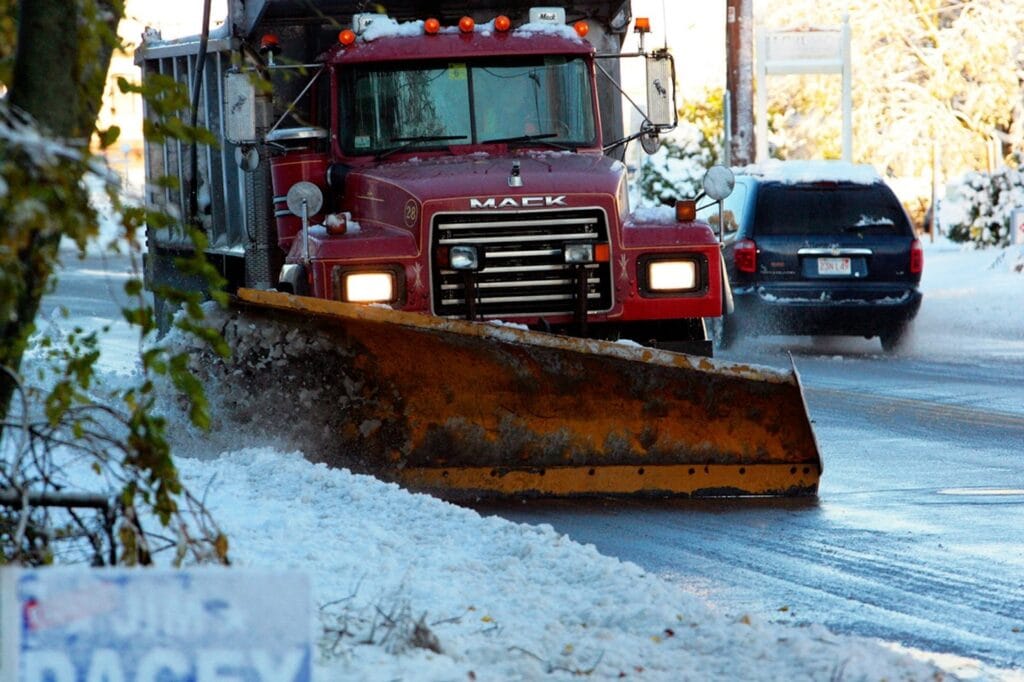
City, county, and state fleets generally operate medium-to-heavy-duty plows capable of clearing miles of roadway per hour.
Their hydraulic systems are built for endurance:
For maintenance managers, hydraulic uptime equals operational continuity. A seized cylinder or pump failure in a blizzard doesn’t just sideline one truck, it can compromise entire routes and seriously delay emergency response times.
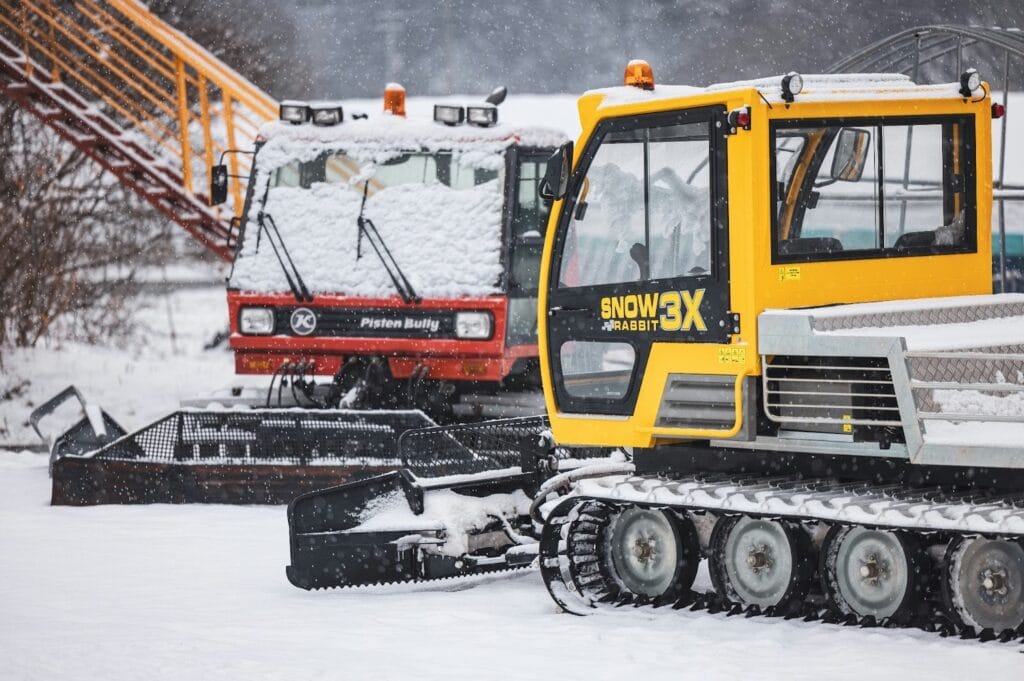
Beyond highways, hydraulics power oversized plows for airports, manufacturing sites, and logistics yards, environments where downtime translates directly to financial loss.
Their hydraulic systems are built for precision and power:
From runways to factory floors and freight yards, we keep critical operations running through expert inspection, repair, and reconditioning of precision cylinders – because downtime is never just an inconvenience; it’s a multi-million-dollar problem.
Whether you manage a five-truck fleet or a statewide operation, downtime during snow season costs more than repairs – it costs operational credibility.
When hydraulic cylinders wear, leak, or lose pressure, operators face:
Top-performing teams don’t just react – they plan for uptime with scheduled inspections, fluid checks, and hands-on operator training supported by expert-level cylinder reconditioning.
Every proactive hour spent maintaining hydraulics prevents hours – or even days – of reactive repair during a snowstorm.
In municipal or commercial fleets, one inoperable plow can disrupt an entire grid. Labor idles. Routes back up. Crews work overtime to catch up – all while roads remain unsafe.
The financial ripple effect is substantial:
By contrast, companies that prioritize hydraulic precision repair enjoy measurable ROI through reduced unplanned downtime, lower total lifecycle costs, and longer cylinder service life.
Properly maintained hydraulics ensure that fleets can perform reliably during the most critical periods – and that operational and financial disruption is minimized.
Hydraulic systems on a plow don’t just fail – they degrade quietly over time.
Micro-scoring inside a cylinder barrel, a contaminated fluid line, or a slightly misaligned mounting bracket can erode performance long before a visible leak appears.
That’s why advanced repair partners like us treat every rebuild as an engineering process, not a patch job. Each cylinder is disassembled, measured, and remanufactured to meet or exceed OEM specifications.
By focusing on tolerance, alignment, and surface integrity, we help fleets maintain consistent hydraulic pressure – and avoid the cascading failures that lead to downtime mid-season.
Our goal isn’t just to repair, but to restore performance and predictability – critical factors when every hour of uptime matters.
Across heavy equipment, construction, and municipal operations, one principle remains constant: hydraulic reliability equals operational resilience.
Top-performing maintenance teams share common traits:
By integrating best practice, even smaller contractors can extend fleet life and minimize reactive maintenance – an approach that pays dividends far beyond the winter months.
While snow plows are one of the most visible examples of hydraulic reliability in action, the same systems power construction loaders, excavators, dump trucks, and cranes – the backbone of every project site.
When hydraulic systems perform flawlessly, so do schedules, budgets, and crews. When they fail, everything else slows down.
Understanding that connection between cylinder integrity and operational continuity is what separates average maintenance teams from industry leaders.
Cylinders Inc. has long positioned itself at this intersection – helping clients bridge the gap between technical precision and strategic uptime management.

Winter may come and go, but for fleet directors, maintenance managers, and ops leaders, the real challenge never stops: keeping every hydraulic system ready, responsive, and reliable.
The quiet months between snowstorms aren’t downtime – they’re opportunity time. Before the first flakes fall, or as plows return to storage, the off-season becomes the perfect window for inspection, performance analysis, and precision hydraulic repair.
It’s the time to identify wear before it becomes a failure, to recalibrate systems for the next cycle, and to protect the uptime that keeps crews efficient and communities safe. Because when the next storm hits, every proactive measure taken today pays dividends in reliability tomorrow.
From the smallest pickup-mounted plow clearing a parking lot to the largest municipal rig clearing an interstate, performance begins and ends with the integrity of the hydraulic cylinders, seals, and systems that power them.
The fleets that lead the way understand this connection. They know that repair precision is uptime protection, and that partnering with experienced specialists isn’t an expense – it’s a strategic investment in longevity and performance.
That’s why Cylinders Inc. works alongside maintenance and operations leaders across industries, providing expert repair, reconditioning, and technical insight that keep fleets ready long before the winter weather hits.
In the world of hydraulics – and in the heart of a Chicago winter – readiness isn’t seasonal. It’s the gold standard.